

By Shannon Pendleton
After a seven-month long advertising campaign priced at $150 million, Barbie finally premiered on the 21st July.
Having made over $356 million worldwide during its opening weekend, breaking box office records as the most commercially successful film by a female director (Greta Gerwig), Barbie has become a cultural moment to be remembered.
The film raised important questions surrounding what it means to be a woman under the patriarchy, and the violence women have historically endured. It also examines being a man in today’s cultural climate where ‘toxic masculinity’ is writhe and online incel communities are on the rise.
Since the premier, the question on everyone’s lips has been: have you seen Barbie?
This is shortly followed by: what did you think?
The answer seems to depend on where you lie on the political spectrum. The left have hailed Barbie as a thoughtful and essential piece of feminist cinema. While the right have dismissed it as woke propaganda – feminist dogma that spews anti-man rhetoric. Here, I want to explore why Barbie is a celebration of both femininity and masculinity.
“Why didn’t Barbie tell me about patriarchy?”
The film begins in Barbieland, a pink utopia full of Dream Houses where the water is always warm and the toast is never burnt. More importantly, Barbieland is a place where women feel safe and celebrated. The Supreme Court is entirely made of women. The Barbies wear what they want without fearing scrutiny from the Kens. And, when they succeed in their careers, be that doctor, physicist, or president, they accept their congratulations whole-heartedly, without modesty or a need to minimise their efforts.
Each difference Gerwig highlights between Barbieland and, what is known here as the “Real World”, is a small reminder of the ways women have been conditioned to live in the shadows. As the narrator explains, Barbieland is “where all problems of feminism and equality can be solved”.

But Barbie is changing: her feet have become flat, her shower water has turned cold, and she finds herself ruminating about death. With help from Weird Barbie, she realises a portal has been opened between Barbieland and the Real World, and Barbie’s owner has become sad. This sadness is permeating Barbieland and making Barbie different – she’s not perfect anymore. To set things back to normal, Barbie embarks on a journey to the Real World to find her owner and help make her happy again. As her committed, and uninvited, companion, Ken follows in tow.
Within minutes of entering the Real World, the pair are awakened to the true differences between Barbieland and the Real World.
Roller-skating down an LA-esque street, Barbie is immediately catcalled and sexually harassed by a man who slaps her ‘behind’. When Barbie retaliates, she is arrested by the police who then continues to harass her, commenting on her body and what she’d look like without clothes.
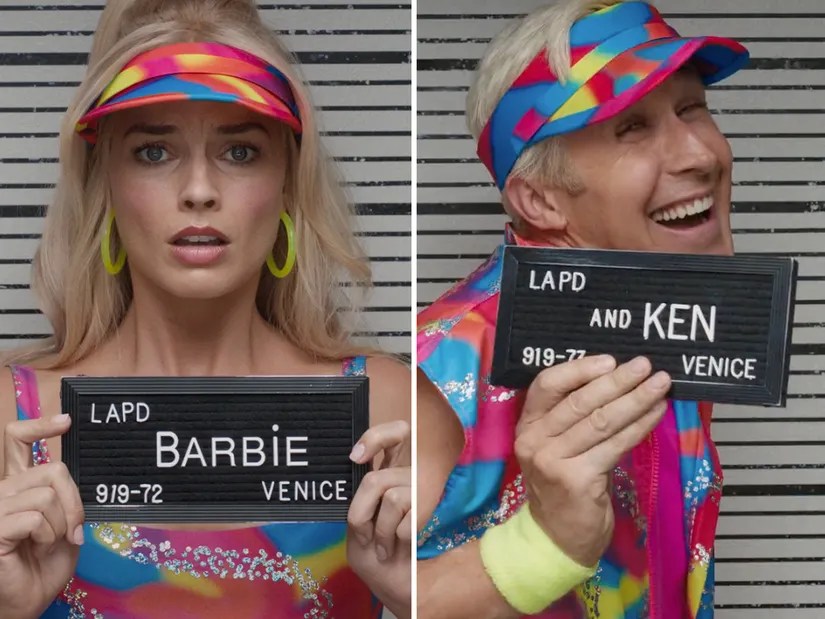
Meanwhile, Ken expresses a feeling of empowerment as he roller-skates down the street. While he explains that he feels “respected”, Barbie describes the interactions she has as layered with an “undertone of violence”.
Ken soon realises that men rule the Real World – and he likes it. Asking, “Why didn’t Barbie tell me about patriarchy?”, Ken decides to return home to tell the other Kens what he’s learnt.
Although at first played to poke fun at the patriarchy, this comedic sequence is underpinned with a real feeling of frustration at the injustice women experience in the Real World. It’s an eye-opening display of what women have grown up with their whole lives.
What’s a reality for us, is something entirely new and tragic to Barbie.
From being mansplained to by our male friends, to being blamed for our murders on account of what we were wearing, women have been socialised to accept the way things are. Through the lens of the optimistic and naïve Barbie, Greta Gerwig gives us all a moment to grieve what Barbie thought the world was, and what it’s far from ever being.
Barbie: A Reclamation of Girlhood
When Barbie meets who she thinks is her owner, Sasha, the teenage girl verbally attacks her for “setting feminism back fifty years” and upholding the impossible beauty standard placed upon women ever since her inception. Sasha, weathered by the world despite her young age, tells Barbie, “Women hate women. And men hate women. It’s the only thing we all agree on”.
Barbie is heartbroken – and so are we.
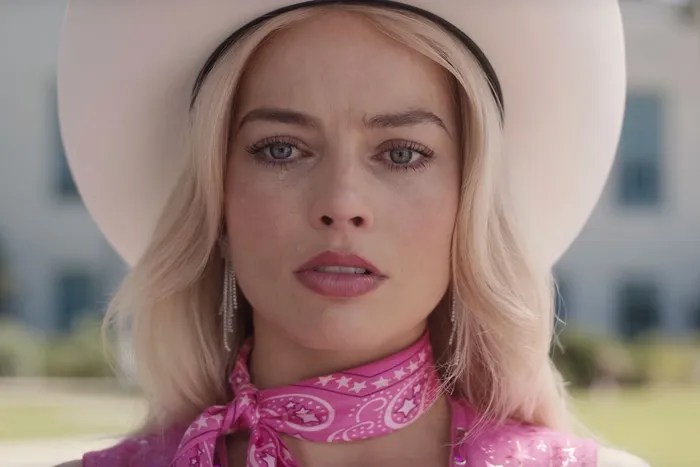
When I was a little girl, I loved the colour pink. I wanted a pink car, a pink house. I wanted everything I owned to be pink. But as I got older, I internalised the message Sasha bluntly explains to Barbie: the world hates women.
As if being a girl was a crime, I scrubbed myself clean of anything that would make me look guilty. So pink wasn’t my favourite colour anymore. I dressed in dark colours, and my friends were boys instead of girls – a fact I was proud of, as though I’d been accepted into an exclusive club. The boys club.
But then, I got older again.
A few years later and slightly more aware of things like the patriarchy and internalised misogyny, I was able to unlearn this need to be accepted by men and leaned fully into my female friendships. Through this, I found the unique beauty and joy there is in them and, to this day, those friendships are the strongest ones I have.
So with the release of Barbie, I felt the child in me, ashamed of liking pink, begin to heal. It was now not just okay to like pink, to enjoy girly things, to be a girl – but it was actually celebrated. In this way, Barbie is a reclamation of girlhood as well as the child-like joy we had to scrub ourselves clean of as teens.
Barbie: An Alternative Model of Masculinity
Barbie wasn’t just a healing experience for women – but for men as well.
When Ken returns to Barbieland, he changes the name to Kendom and replaces the Barbie Dreamhouses with Mojo Dojo Casa Houses. He also turns the Barbies into the Kens’ “long-term, long-distance, low-commitment casual” girlfriends. In a quirky display of misogynistic ideology, Ken has returned to Barbieland and taken the patriarchy with him.
In a scene where the Kens serenade the Barbies with guitars, they sing Push by Matchbox Twenty. Here, the opening lyrics, “I don’t know if I’ve ever been good enough, […] I don’t know if I’ve ever been really loved” give insight into the neglect the Kens have previously felt at the hands of the Barbies, who often pushed them aside. This is shown when Barbie rejects Ken’s request to sleepover because “Every night is girl’s night”. However, as the song continues, the lyrics become more sinister: “I wanna push you around, […] I wanna push you down, […] I wanna take you for granted”. Here, the hopeless romantic to insidious incel pipeline is clearly laid out.
The ‘involuntarily celibate’, or ‘incel’, movement is an online subculture where members hold misogynistic worldviews, blaming women for their lack of sexual experience. The movement has become increasingly active and dangerous in recent years. An analysis of online incel communities has found that the use of degrading language and references to inflicting violence had increased by eight times from 2016.
Members have extended their activity outside of online spaces and have been responsible for a series of violent attacks. In 2014, a self-proclaimed incel created a 141-page document detailing his hatred toward women and blaming them for his virginity, before killing seven people including himself. In 2018, a Toronto man posted to Facebook, ‘The Incel Rebellion has already begun!’ before driving his van into a crowd of people, killing ten and leaving sixteen injured. In 2020, a machete attack at a massage parlour, also in Toronto, saw the death of 24-year-old Ashley Noelle Argaza. The 17-year-old responsible was charged for incel-related terrorism. Alex DiBranco, executive director of the Institute for Research on Male Supremacism, explains that incel-related violence is increasing but “not being taken as seriously as it needs to be”.
Although the Kens in Barbieland never resorted to violence, their need to control the Barbies, rid them of their autonomy, take their houses, their government, and – ironically – use them as their playthings and ‘dolls’, felt violent.
Instead of condemning the Kens as one-dimensional villains, Gerwig redeems them in the musical number I’m Just Ken. Here, the Kens, together, realise they’re good enough as they are, that they don’t need a romantic interest to define them. A narrative previously used to empower women, the permanent love interests throughout cinematic history. Closing the song, the Kens sing together, “I’m just Ken / and I’m enough / and I’m great at doing stuff” before asking each other to “put that manly hand in mine”, as they kiss each other on the cheek. In an affectionate display of male friendship and tenderness, Gerwig offers an alternative solution to the loneliness and insecurity many young men feel.
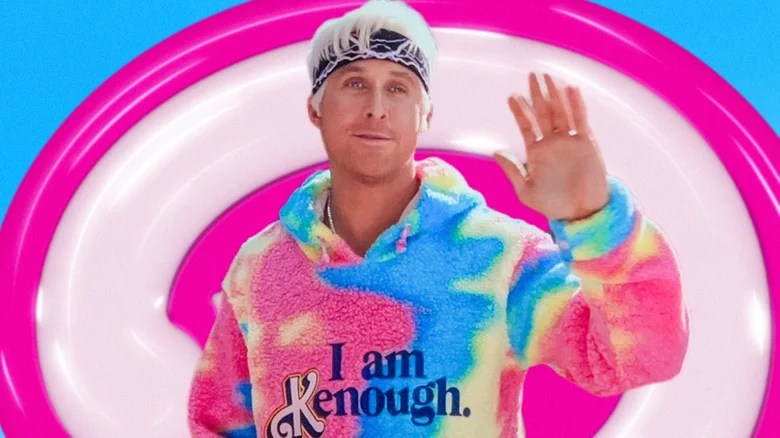
Through this closing message, Ken realises he’s not an accessory to Barbie – he’s “Kenough”. A playful phrase that has been adopted by many men across social media who have praised the film for giving boys and men an alternative narrative – separate from the toxic messages perpetuated by the likes of Andrew Tate, Jordan Peterson, and Ben Shapiro. Piers Morgan even dubbed the film as “an assault on men”, claiming he’d be “executed” if he made a “male version” of Barbie – completely missing the fact that almost every film in mainstream media is a male version of Barbie.
Eliza Hatch, founder of the feminist photography platform documenting accounts of public sexual harassment, Cheer Up Luv, explains that she was moved by Ken’s story arc “because of the current climate of masculinity clashes we are seeing in the (sadly) real world today”. Hatch sympathised with “Ken’s existential battle of finding himself and becoming ‘Kenough’”, explaining that “We need more ‘Kenergy’ in the real world, in the way that we need men to go on the same journey of self-discovery and questioning that Ken does in Barbie. […] We need to encourage more men and boys to ask [these questions], rather than just [go] along with the limited version offered to men of ‘alpha’ masculinity and the traditional stereotypes of what it means to ‘be a man’.”
Watching Barbie on the opening weekend was a revelation. I rejoiced in experiencing a packed cinema full of girls, women, boys, and men wearing pink, excited to see Barbie, just as I was. It was a refreshing and beautiful moment to be a part of. I hope more people can see that the film wasn’t made to villainise men and further the divide between men and women – but to close it.


What it means to be a man is just as much decided by western culture as womanhood is. I had a class where we talked about personal wealth- for men it is status and success, nothing else counts. For women it’s beauty, and beauty by itself is enough for a woman to be personally wealthy. A man who is smoking hot and has no job no money and no prospects is considered a dead end loser in the mating pool, a woman in exactly the same situation, if she’s attractive to men, is considered an A+ mate.
Women also face a LOT more bullying online from women than men. Men are much more visually cued in their attractions than women, and this bothers women, who believe low effort lifestyle should still be rewarded with an ideal match. Does that work for men? Of course not.
I’m not saying men have it worse than women in any way, each sex has advantages and disadvantages, biases that work out to a plus or minus depending on the category, but when it comes to shallowness (men judge weight, but women judge height which can’t change), both men and women are truly equal.
LikeLike
I loved this movie, but I was sad it did so little to address toxic feiminity, and I don’t mean the cosmetic kind, I think women leaning into womanhood and girlhood is necessary and empowering for all of us! But we exist in a society where on the one hand women are told to define themselves through the men in their lives, and to compete with each other with maximum cruelty, and on the other we are told that we have extra intrinsic value AS women, which men do not have. A man without status prospects, income, is seen in as undesirable, almost a non-entity, whereas women aren’t judged on any of that- we are judged on beauty and desirability, which you could argue is just as shallow, but the truth is MOST humans are beautiful and with an active lifestyle and some discipline you will naturally express that!
Barbie also touched only for a nanosecond on women bullying other women- but that’s the story of my life. BBC even did a study that online and in school the vast majority of girls are bullied by other girls. This needs to be addressed. Women are bullied for being “too pretty, and not pretty enough” just like the movie says. The teenage Sasha was a bit insufferable for me, she never seemed to grow out of her absurdly dark worldview (there is such a thing as female privilege, not just male, and she is a pretty girl so she’s swimming in it), so though I REALLY loved the movie (finally strong women that don’t have to pretend to be men to be strong!!), I wanted her character to learn something and grow, and maybe even apologize to Barbie for making her some kind of focal point for internalized misogyny or whatever she said. She’s was so mean at first she should have felt bad later, just my 2c.
As for beauty standards, only in the US, the fattest country on earth, are we so triggered by this. Beauty for both men and women involves discipline and activity, and I am sick to death of this current trend of male beauty being celebrated and female beauty being denigrated. Who cares if not every woman can achieve the same body shape, are we a monolith? Women are naturally beautiful and we need a healthier society that encourages choices leading to that! But today even female celebrities can’t lose weight without fans turning on them. So I hope stories like Barbie helps us pull together maybe just a little bit more. Women need to support each other. And we need to remember life is not meant to be static and sedentary. We are all meant to get out there and rock it.
LikeLike