
By Shannon Pendleton
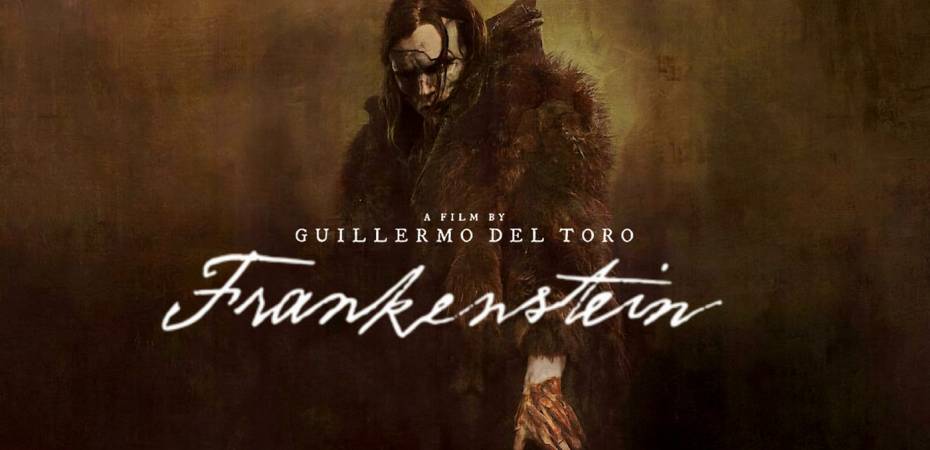
Based on the 1818 novel by Mary Shelley, Guillermo del Toro’s Frankenstein (2025) both pays homage to the original while inflecting it with new and dynamic elements that revitalise the source material.
Abandoning the crude imagery of the square forehead and bolted temples that is so often associated with the character, del Toro’s Creature resembles that of Shelley’s, standing at eight feet tall with “straight black lips” and “lustrous” and “flowing” hair.
Along with the shift in aesthetics, del Toro’s Creature speaks quite eloquently – departing from the lumbering, groaning version we’ve come to know in previous iterations. By abandoning what popular media has told us about the character, Frankenstein (2025) sets itself apart in its respect for Shelley’s original vision.
On a deeper level, del Toro honours Shelley’s text by splitting the film in two, with the first part told from the perspective of Victor Frankenstein and the second from The Creature’s.
By structuring the narrative in this way, we are given access to The Creature’s emotional arc and the intellectual journey he undergoes. However, within this narrative, del Toro takes creative liberties that build upon the novel’s cautionary exploration of prejudice and man-made violence.
Revealing the humanity in monsters and the cruelty in people
In a recent interview with Screen, del Toro explains that when it comes to storytelling, he has “always sided with the monsters”, characterising them as “more interesting, fascinating, and pure”.
Indeed, it can be argued that del Toro protects The Creature from Shelley’s original vision by removing much of the violence committed by him to instead magnify his more forgiving attributes.
Expanding upon Shelley’s lesson of the cyclical nature of generational trauma, del Toro transforms Victor’s father from the loving, caring parental figure he is in the novel, to a ruthless, abusive presence in the film.
As Leopold is a vindictive man, Victor becomes the same – and if The Creature had remained in Victor’s captivity, it is likely the pattern would have continued. Instead, del Toro allows The Creature to preserve his humanity through the guiding hands of Elizabeth and De Lacey.
While De Lacey – a kind elderly blind man – is a fixture from the novel, del Toro remodels much of Elizabeth’s character by redirecting her desires from Victor to The Creature. This is a shift that humanises The Creature through his ability to love and be loved.
In the film, Elizabeth’s introduction to The Creature is the first act of kindness he is shown. Telling him her name and handing him a leaf – an indication of a world beyond Victor – she arms The Creature with an alternative to the life he has come to know.
As a result, Elizabeth’s compassion and sense of curiosity become fundamental to The Creature’s temperament, demonstrating that, although pain and abuse have an enduring impact in childhood, so does kindness and love.
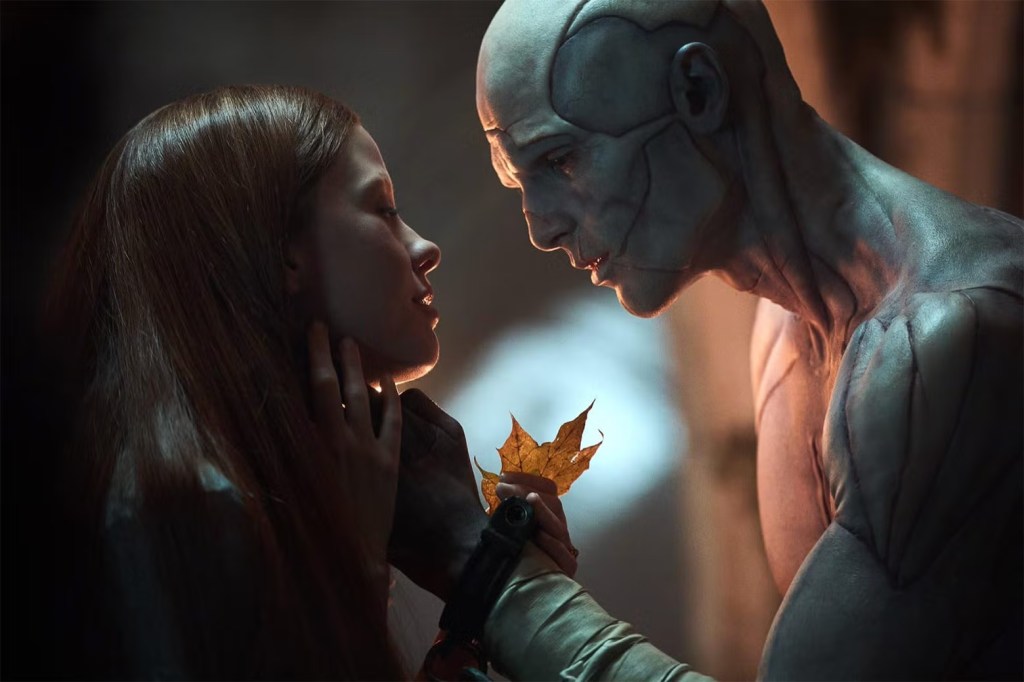
The romance between the two is later confirmed by the altered circumstances around Elizabeth’s death. In the original text, Elizabeth is strangled by The Creature on her wedding night in an act of calculated revenge against Victor.
In del Toro’s version, Elizabeth sacrifices herself to save The Creature from Victor’s rage. In a tragic display of love, Elizabeth bleeds out in The Creature’s arms, her white dress stained red as she sighs her last words, “Better this way… to fade… with your eyes gazing upon me”.
From Hellboy (2004) to The Shape of Water (2017) – and especially so in Frankenstein (2025) – del Toro has devoted his career to revealing the beauty in so-called monsters. By challenging viewers to reconsider how they perceive and treat those who appear different from themselves, he invites us to confront the ways in which ignorance breeds monstrosity and to interrogate the idea that the true monster is often ourselves.
The myth of an honourable death: Del Toro’s anti-war message
Another notable way del Toro deviates from the source material is by bringing the timeframe forward from the end of the 18th century to the middle of the 19th – just as the Crimean War was coming to a close.
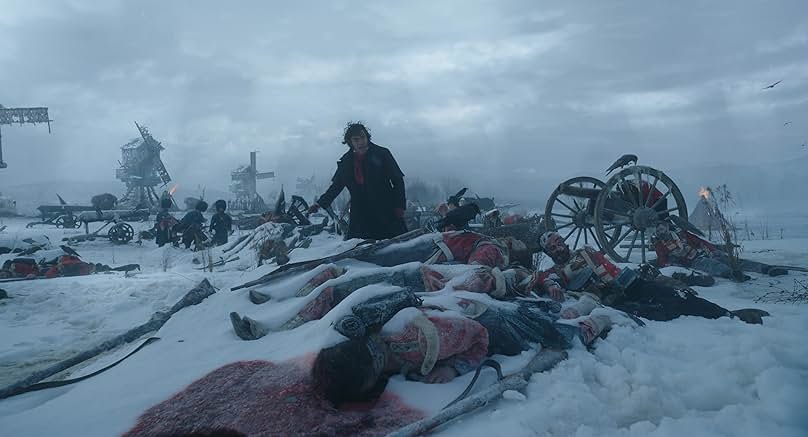
This change means that, while Shelley’s Frankenstein resorts to lying and thieving to obtain the body parts needed to make his creation, del Toro’s enjoys a bounty of bodies to choose from. By making this shift, the cruelty of war is highlighted, along with the power imbalances that exist within it.
This imbalance is personified by the character Henrich Harlander, an invention of del Toro’s. As an arms merchant, Harlander profits directly from the war and generously funds Frankenstein’s scientific pursuits, perfectly embodying the nexus between wealth and violence.
His disregard for the sanctity of life is laid bare during a scene that takes place on an inactive battlefield: while Frankenstein frantically selects bodies for his creation, Harlander languidly lounges atop his luggage, unmoved by the fallen soldiers littered around him – deaths he has financed and continues to exploit.
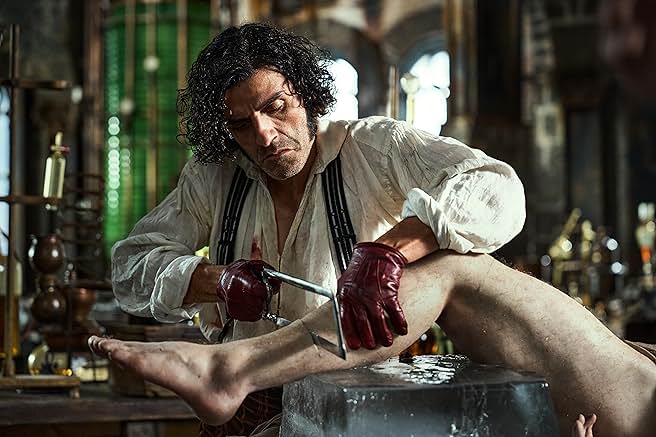
As Frankenstein locks himself away in his tower, piles of decapitated heads and amputated limbs rise high around him. In this way, del Toro not only visualises the anti-hero’s monstrous nature, but also the bleakness of war, as young men – once promised honour and glory – now lay dead, dissected and discarded in the basement of a mad scientist.
Del Toro’s distaste for the war does not remain implicit. During her first meeting with Victor, Elizabeth condemns the ongoing violence, arguing that because of powerful “fools”, soldiers die “face down in the mud, choking on blood, screaming in pain” while those who pull the strings “remain at home untouched”.
As such, Frankenstein (2025) emerges as an emphatically anti-war film. Instead of glorifying military service and endorsing the government-pedalled myth that death on the battlefield is a noble and worthwhile sacrifice, the film exposes how those in power profit from wartime – while soldiers give their lives, robbed of their dignity in the process.
To Live, Even Brokenly
In typical del Toro fashion, he affords his “monster” a somewhat happy ending – departing from Shelley’s cynical telling where it is suggested The Creature kills himself.
In Frankenstein (2025), The Creature and Victor are offered a glimpse of reconciliation as Victor apologises and acknowledges The Creature as his son for the first time.
On his death bed, Victor asks for forgiveness, before inviting The Creature to forgive himself, venturing to end the cycle of abuse that has ravaged the best part of his life.
In this moment, the now softened scientist – although emaciated – proposes, “If death is not to be, then consider this my son – while you are alive, what recourse do you have but to live?” By making this change and allowing the pair to achieve some sense of closure before Victor’s death, del Toro grants The Creature the chance of a future.
Albeit grief-stricken and alone, The Creature walks into a new dawn, bathing in the glow of the sunrise as it peaks over the snowy horizon and bleeds orange into the open sky – a reminder of Victor’s first and only teaching to The Creature that “Sun is life”.
The film ends with the quote by Lord Byron from his poem Childe Harold’s Pilgrimage, Canto III: “And thus the heart will break, yet brokenly live on”, granting the audience some insight into The Creature’s worldview as he steps into a new day – if not excited, curious for what comes next.
 The Curve Magazine