
By Shannon Pendleton
*spoilers ahead for The Substance*
There’s no getting around it – The Substance is disgusting. The epitome of body horror, the film harnesses the genre to amplify its message as it explores the ugly side of the beauty industry, and the human cost of forever striving for an unattainable standard.
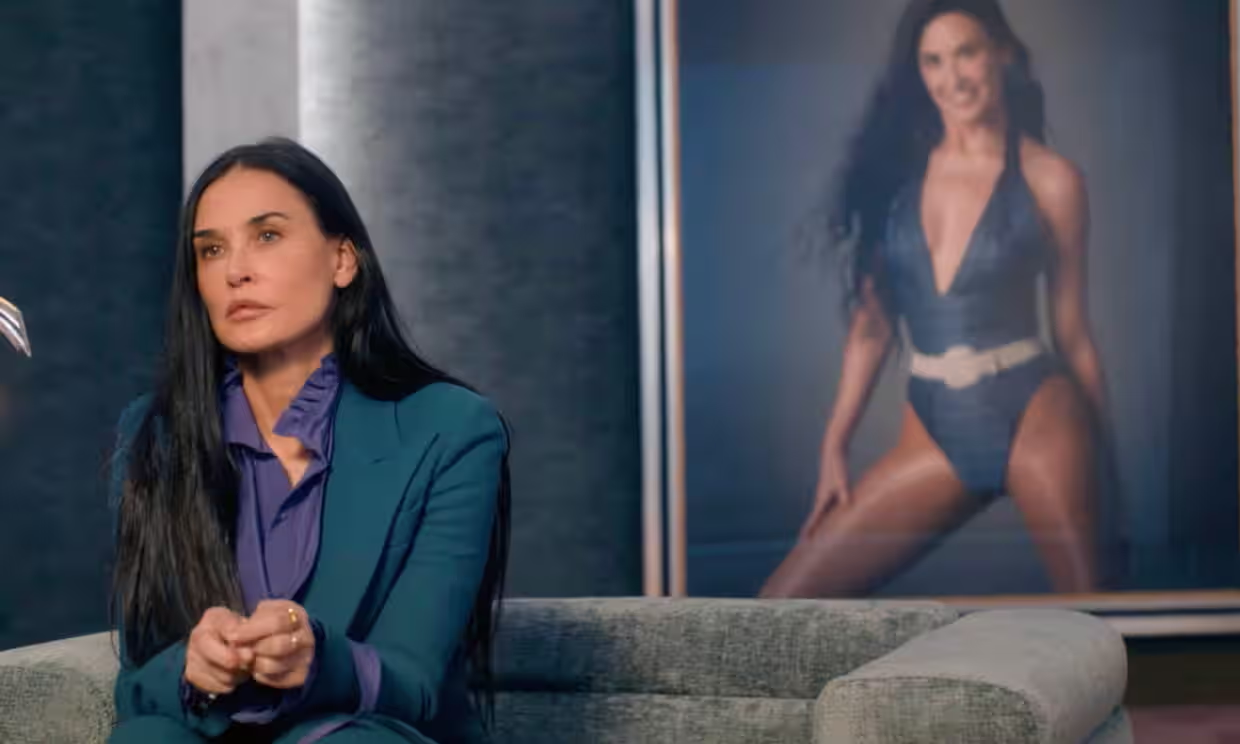
The film follows Demi Moore’s Elisabeth Sparkle, washed-up aerobics TV star who’s fired from her own show after turning 50. The TV studio sends her flowers with the note ‘You were great!’, a hollow gesture marking the end of her career and highlighting that her best days are behind her. Dejected and alone – with no support system to speak of – Elisabeth turns to a black-market drug known as ‘The Substance’.
“Have you ever dreamt of a better version of yourself? More beautiful, more perfect?” – the drug is sold to Elisabeth as a way back in.
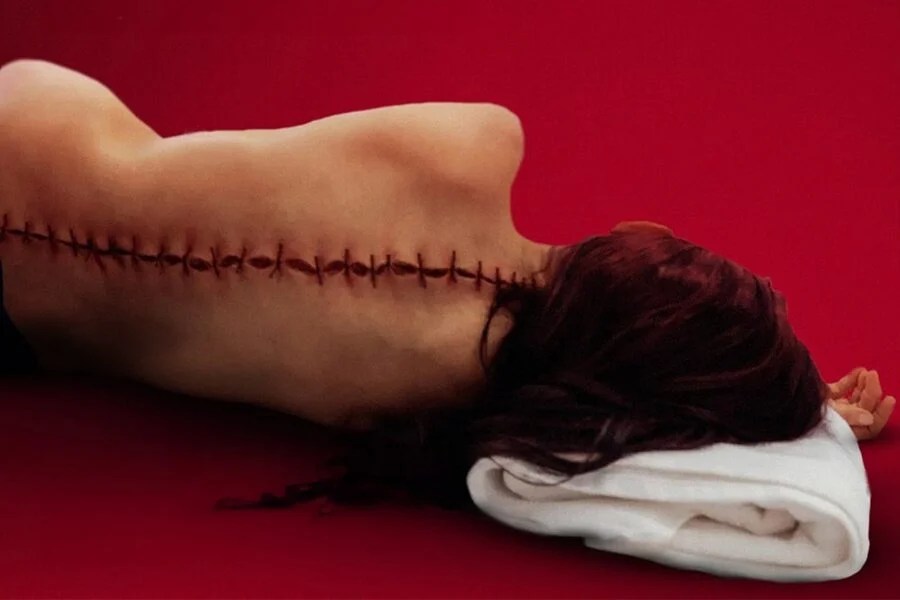
Standing naked in front of the mirror in her clinically white bathroom – an insight into how Elisabeth has transformed her home into a means to further scrutinise herself – Elisabeth injects herself with the drug. Falling to the floor in agony, her back splits open and out emerges ‘the other’. Bouncy, glossy, and with “everything […] in the right place”, what crawls from Elisabeth is the sultry ‘Sue’.
After examining her new body, Sue takes a hook and thread to sew up the gaping hole from which she came. Groans echoed throughout the theatre in which I was sat as Sue pierced fresh holes over and over again, feeding the thread in and out along Elisabeth’s spine. Although the result was the sexy Sue, the means to get there was a lifeless Elisabeth – her body limp on the cold white tiles, mouth agape, eyes staring for miles. This is The Substance’s portrayal of the behind-the-scenes horror of what it takes to be beautiful.
‘You are one’ – the violence we perpetrate against ourselves
The rules are simple – Sue has seven days, Elisabeth has seven days, and at the end of each week, the pair must switch. If Sue doesn’t switch back to Elisabeth’s body after her time is up, “What has been used on one side, is lost on the other”. With their shared consciousness, the two live out vastly different lives. While Sue bounces around town, gorging on the many opportunities that are thrown her way, Elisabeth is left to skulk in the shadows – out of work and invisible to those around her. It therefore doesn’t take long for Sue to start getting greedy, carelessly chewing into Elisabeth’s time.
After a night of drunken fun for Sue, Elisabeth wakes up the next morning and instead of the usual hangover, her index finger has become wrinkled and crooked, her nail gnarled and discoloured. Elisabeth’s quick decline progresses from here – advanced arthritis soon transforms her leg, ravaging her joints until her knee is bulbous and stiff. Elisabeth’s once silky long black hair dries into wispy grey strands, while her smooth skin creases into paper-thin wrinkles. By the end of the film, Elisabeth’s spine has curved into a hunch-back and she has become unrecognisable as she hobbles around her home, horrified at what she has done to herself. It’s a wickedly hyperbolic view of old age, designed to play on society’s fears of women growing old.
While Sue shaves decades off Elisabeth, Elisabeth spends her time binging on a variation of ‘indulgent’ foods, from waffles to entire chickens, leaving Sue to wake up to a greasy mess of bones and meat, dirty dishes scattered throughout the apartment, windows plastered with newspapers and egg yolk. When the two complain to The Substance hotline, a disembodied voice callously reiterates, “remember, there is no she and you – you are one.”

In the film’s final act, Elisabeth reaches breaking point and attempts to ‘terminate’ Sue. But as she watches on as Sue’s body ebbs closer to death, she panics, remembering everything that Sue afforded her – the fame, attention, and love. Regretting what she’s done, she begs Sue to come back to life, confessing, “I need you, because I hate myself. They’re going to love you so much – you’re the only loveable part of me.” It’s a poignant and honest moment as Elisabeth’s actions of self-hatred perpetrated throughout the film come to a head, revealing that, while Elisabeth craved the love from others throughout the film’s run, what she was chasing more than anything else was the ability to love herself.
In a recent interview with The New York Times, Moore explains that while she had been told to lose weight throughout her career, the “true violence” was what she did to herself. She explained that the ways in which she “tortured” herself with “extreme” exercise and restrictive diets meant she defined her self-worth through her body and what others thought of her. Indeed, while society upholds narrow ideas of beauty and pummels them into our collective psyche, it is the damage we do to ourselves at the end of the day, in the quiet moments – standing in front of our bathroom mirrors – that is the true horror; it is the hatred we’ve internalised that does the real work.
Throughout the film, it seems impossible that the two share the same consciousness. In a particularly gory scene – which provides a physical representation of the phrase ‘beating yourself up’ – Sue smashes Elisabeth’s head into their bathroom mirror, squashing her elderly face into a mess of split flesh, pounded and bloody. This display of self-harm ignites outrage within the audience as we question how someone could treat themselves with such distain. However, if we sit with this thought a bit longer, it can be helpful to consider the times we may have hurt ourselves without realising. Have we ever drunk too much on a night out, condemning ourselves to a gruesome hangover the next morning? Have we ever procrastinated instead of studying or working, leaving it to our future selves to cram last minute for an exam or deadline?
The film asks us to think about how we talk to ourselves – have we ever called ourselves ugly or stupid, punishing our past selves and denouncing our future ones?
When we consider the film through this lens, Sue’s and Elisabeth’s treatment of one another becomes much more realistic. It therefore becomes clear that The Substance is not only an examination of what society does to us, but also what we do to ourselves.
The gendered curse of ageing
Throughout the film and TV industry, women are often attached to an expiration date where, in order to preserve their careers, they must endure countless cosmetic and surgical procedures. While the likes of Sandra Bullock, Nicole Kidman, and Jennifer Anniston have enjoyed careers well into their 50s, many actresses who failed to uphold this narrow standard of beauty have slipped into movie-star obscurity. Indeed, award-winning journalist, Poorna Bell, explains, “older female celebrities are usually only given space if they somehow seem to defy time, and if they have an extremely slim and toned body.”
In 2022, Top Gun: Maverick was released, and audiences speculated as to why the original film’s leading lady, Kelly McGillis, didn’t make an appearance. However, McGillis herself explained she wasn’t surprised that she hadn’t been invited back: “I’m old, and I’m fat, and I look age-appropriate for what my age is, and that is not what that whole scene is about”. McGillis continued: “But…I’d much rather feel absolutely secure in my skin and who and what I am at my age as opposed to placing a value on all that other stuff.”
Other actresses who have spoken out against how women are treated in the industry include Emma Thompson who has said, “we’re constantly watching films where older men have wonderful roles and older women really don’t”. Similarly, Grey’s Anatomy’s Ellen Pompeo, has said that young actresses are “yesterday’s trash” once they reach their mid-30s.
Indeed, a 2020 study reviewed the 30 highest grossing films of 2019 across Germany, France, the UK, and US, and revealed that 75% of characters who were 50 years or older were male. The study also found that while no female characters aged over 49 were featured in leading roles, the women who were portrayed often fed into harmful stereotypes, depicting older women as lonely and homebound.
Gendered ageism not only thrives in Hollywood but is an insidious form of prejudice that seeps into every arena of society. While the world’s population is living longer than ever before, age discrimination is equally alive and well. For example, in 2021, the number of age discrimination claims filed with employment tribunals rose by over 30%. Dr Lucy Ryan, author of Revolting Women, explains that the false ‘decline’ narrative continues to follow women around the workplace, perpetuating the ageist myth that as women age, they become unable to fulfil their duties. The result is that women often step down from higher roles or seek early retirement, shrinking their post-retirement savings and creating an underrepresentation of women in senior roles. This prejudice is made worse for older women of colour who face the full force of intersecting ageism, sexism, and racism, experiencing the highest levels of age discrimination through job restrictions and lower pay.
Breaking the mold: a celebration of older women
The very fact that The Substance exists suggests a shift is underway in how older women are visualised on screen. No longer diminishing this demographic to one-dimensional lonely cat ladies, cinema is now realising them as the dynamic, interesting, complex people they are – full of hopes, dreams, and regrets, capable of lust, anger, envy, joy, and so much more.
At this year’s Toronto International Film Festival (TIFF), Demi Moore said she feels there has been “a wake up to a demographic that is deserving of being served”, referencing a range of films at the festival that have explored the experience of the older woman, from Nightbitch to The Last Showgirl.
In 2022, David Tennant and Lesley Manville were among the 100+ British actors and public figures who signed an open letter to the film and TV industry, demanding an end to its “entrenched” ageism against older women. Led by the activist group, Acting Your Age Campaign, the letter condemned the industry for cultivating an environment where women have an onscreen “shelf life” while their male counterparts enjoy a “whole life”.
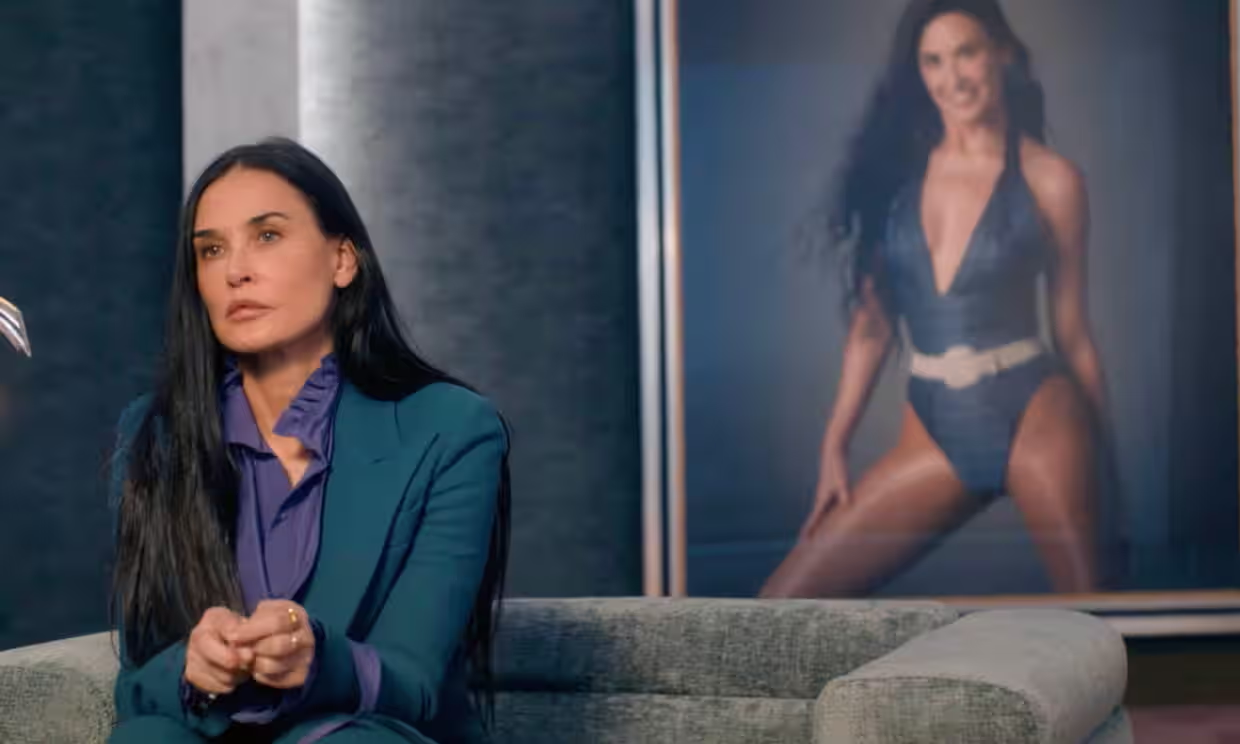
In 2024, more and more actresses are redefining what ‘aging gracefully’ means – instead of freezing the clock, they’re leaning into it. While Andie MacDowell has embraced her silver hair, Pamela Anderson has become known for makeup-free appearances on the red carpet and has rebuked the anti-aging industry as a “lie.” Similarly, Jamie Lee Curtis has announced she is “pro-aging” as her age allows her to expand intellectually and creatively.
Although the use of ‘preventative Botox’ is on the rise in young people, I have hope that through role models such as these, the younger generation will have a chance to grow up without the fear of looking their age as they do. With tomorrow uncertain and the planet continuing to deteriorate as the climate crisis sets it afire, ageing has become a privilege – so why fight it?
 The Curve Magazine