
By Shannon Pendleton
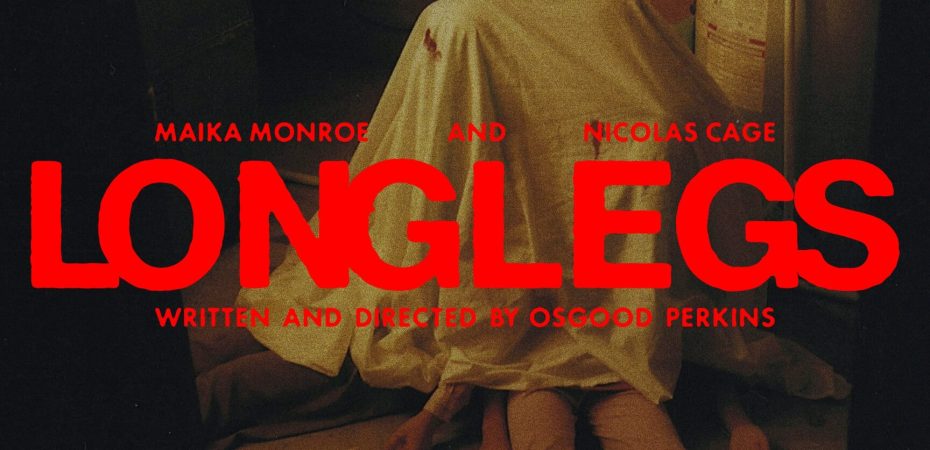
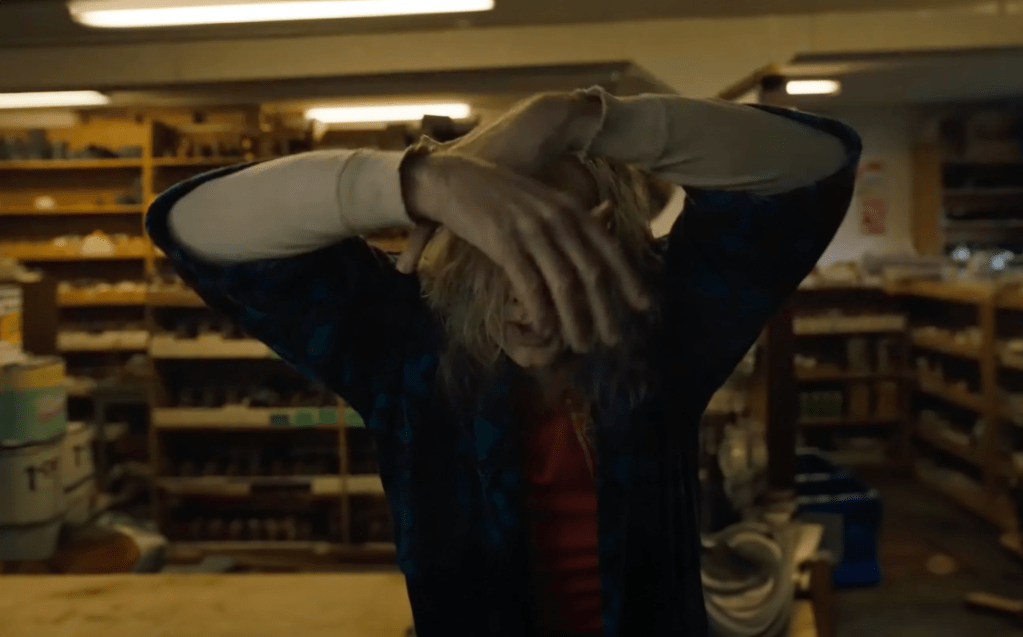
Longlegs follows the story of Lee Harker, a junior FBI agent, as she investigates the case of androgynous serial killer, Longlegs, a man who seemingly slaughters families without ever entering their homes. Immediately, alarm bells ring as the trope of the psychotic transfeminine killer is a tired fixture of the horror genre.
A notorious example of the trope is Buffalo Bill in The Silence of the Lambs (1991) who kidnaps women to skin them and make a ‘woman suit’ for himself. Similarly, Norman Bates in Hitchcock’s Psycho (1960) dresses as his late mother while killing his victims.
While these characters aren’t necessarily transgender, the message remains clear – blurring the lines of gender presentation is disturbing, creepy, and even dangerous. Dressed to Kill (1980) and Sleepaway Camp (1983) are other, more explicit, examples where the transgender villains kill directly because of their gender identity.
The transfeminine killer trope: a troubling legacy
Nevertheless, some critics argue that Longlegs serves as a commentary on this trope, rather than participating in it. To understand this perspective, it’s important to unpack the context behind the film.
Osgood ‘Oz’ Perkins, director of Longlegs, explains in an interview with People magazine that the film’s premise stems from his childhood experience of growing up with a closeted but “very famous, visible father who was living two lives” as a “homosexual or bisexual man”.
“the film borrows quintessential elements from the horror genre over the last few decades, including police procedurals, satanic themes of possession, and demonic dolls”
Indeed, Oz is the son of Anthony Perkins, horror director and actor, most famous for his portrayal of the aforementioned Norman Bates. Oz explains in the interview that his mother, Berry Berenson, concealed his father’s identity from him throughout his childhood, fostering an environment of secrecy before his father eventually died of AIDS-related illness at age 60.
Samantha Allen, a GLAAD Award-winning journalist, editor, and trans woman herself, argues in support of Longlegs. In her essay, Is Nicolas Cage’s New Movie Longlegs “Queerphobic”? An Investigation, Allen explains that Longlegs “is in conversation with Psycho and Silence of the Lambs, but in a decidedly metatextual and referential way”.
She argues that the film “knows it’s a film,” as demonstrated in one of the opening scenes where an FBI agent instructs Harker’s team to go door-to-door to investigate the latest murder, “just like they do in the movies.” Indeed, the film borrows quintessential elements from the horror genre over the last few decades, including police procedurals, satanic themes of possession, and demonic dolls, to name a few.
In the film’s final act, it is revealed that Harker’s own mother, Ruth, had been working alongside Longlegs to kill the families. While Longlegs crafted dolls resembling the targeted children, Ruth disguised herself as a nun to gain entry to the victims’ homes, before gifting the daughters the dolls for their birthdays.

What then ensues is a murder-suicide where the satanic dolls possess the father of the household, leading him to murder his family before taking his own life.
As Ruth explains the truth to Harker – that she agreed to help Longlegs perform these satanic rituals for years on end in exchange to keep Harker safe from such a fate – the parallels to Perkins’ own life become clear.
Can old tropes tell new stories?
Perkins explains that Longlegs is “the most baroque horror version of, ‘What’s going on in my household?’ [that] every kid probably feels to some greater or lesser extent. But if your father’s a public movie star and you don’t know who he is, that’s a little bit more profound.”
Allen explores this point in her article, clarifying that “Oz is not saying homosexuality is evil; he’s saying well-kept secrets possess an almost otherworldly power.”
Allen therefore argues that the film cannot be separated from the context of Perkins’ familial relationship with queerness and secrecy.
She explains that the current discussions condemning the film as just another transphobic horror flick have left her “feeling weary, and worried for the media literacy of moviegoers”, emphasising that films “can use old genre tropes to tell subversive new stories.”
But does Longlegs truly subvert these horror tropes? Would a viewer unaware of Perkins’ family history interpret the film as a meditation on the horror genre that prompts deeper reflection on the harmful impact of its tropes? Or would they instead further internalise the anti-trans rhetoric that currently pervades modern media and politics?
“Oz is not saying homosexuality is evil; he’s saying well-kept secrets possess an almost otherworldly power.”
In reality, should audience members be expected to understand the horror genre’s history of vilifying trans people in order to ‘correctly’ interpret Perkins’s critique of this history in Longlegs? Likewise, is it the onus of the viewer to be aware of Oz Perkins’ specific family trauma and relationship with his closeted queer father, in order to fully appreciate the film?
If a viewer leaves the cinema believing that Longlegs relied on outdated transphobic themes, is that a reflection of poor media literacy, or is it actually an indictment of the frightening times we live in where being transgender doubles-to-triples risk of death?
According to a 2023 Home Office report, hate crimes against trans people have reached an all-time high, with an 11 percent increase from the previous year. This rise has been attributed to growing anti-trans sentiment from the media and politicians.
Longlegs targets the wrong villain
“Berlatsky posits that the film is therefore “an elaborate, bizarre deflection” where “horrific patriarchal violence” is blamed on a “gender-ambiguous villain.”
While there is no statistical evidence that transgender people are more violent than the general population, a leading cause for the premature death of women worldwide is violence perpetrated by men, as reported by the 2020 Femicide Census.
What’s more, trans women are actually four times more likely than cisgender people to become the target of violence.
Here lies the problem, argues Berlatsky: instead of exploring the prevalence of domestic violence and the role cisgender men play in the deaths of women and girls on a global scale, Perkins zeroes in on a queer-coded man in Longlegs, and a seemingly mentally ill woman in Ruth.
Berlatsky posits that the film is therefore “an elaborate, bizarre deflection” where “horrific patriarchal violence” is blamed on a “gender-ambiguous villain”.

So the question remains – with a backlog of transphobia embedded within the horror genre, and the current political and social climate becoming increasingly dangerous for the trans community, does Longlegs perpetuate the problem, or challenge it?
Director’s intent vs. audience perception
The conversation taking place around Longlegs raises questions as to the state of media literacy in modern audiences, the importance of context when consuming a piece of film, and whether it matters what a director intends versus how the final product is received by audiences.
Drew Burnett Gregory, senior editor at LGBTQ+ publication, Autostraddle, says: “I do not think most audiences will be reflecting on Oz Perkins as the son of Anthony Perkins and what the film is unpacking about the history of queer villains. […] But does that matter? […] I would rather have work that’s interesting and challenging than work that is afraid of being misinterpreted”.
While it’s crucial to have brave cinema that challenges conventions, directors should consider how their work might be interpreted in isolation, removed from context, as misinterpretation can cement anti-trans narratives. Sensitivity to these potential outcomes is therefore crucial.
According to the 2021 census across England and Wales, trans people make up 0.5 percent of the population. This means that most people are likely to never meet a trans person or know them in any meaningful way.
As a result, accurate media representation of this marginalised group is essential. When harmful tropes persist, they contribute to the alienation and vilification of the trans community, reducing very real individuals to dangerous and strange caricatures in the eyes of the general public.

What’s more, these tropes affect how trans people see themselves, degrading their sense of self-worth as they are continuously bombarded with the conflation of gender fluidity and monstrosity on screen.
“While it’s crucial to have brave cinema that challenges conventions, directors should consider how their work might be interpreted in isolation, removed from context, as misinterpretation can cement anti-trans narratives.”
It’s clear that Perkins didn’t intend to make a film that adds to the pile of transphobic media we’ve seen over the past few decades. Perkins is intimately aware of the tragedy that comes from suppressing one’s queer identity and how it affects those around you.
He’s also very in tune with the role the horror genre has played in spewing out queer-coded villains, as illustrated by his contribution to Queer for Fear: The History of Queer Horror (2022), a documentary that explores LGBTQ+ representation in the horror genre.
What’s more, amongst all the discourse surrounding whether Longlegs is transphobic or not, Perkins himself bluntly said: “Anyone who is anti-trans is a f*cking piece of sh*t idiot and it would be great to not be confused with a f*cking piece of sh*t idiot.”
But does it matter what Perkins wants or intends for the film? By the end of Longlegs, he comes dangerously close to perpetuating the problem he rallies against.
In the end, it’s revealed that the ultimate villain of Longlegs isn’t actually Longlegs himself – he’s just another puppet of Satan, just as Ruth is, just as the possessed fathers are.
They’re all agents of something more malevolent: the real villain isn’t the cishet man or the androgynous loner, but a greater darkness we never see or hear.
“Longlegs is far from a perfect film, but I think it provides an opportunity to investigate cinema and the tropes it upholds.”
Leaving more questions than answers
Perhaps this allows the viewer to examine the broader context of what’s happening in the world – does the evil in our lives have a clear culprit, or should we examine the larger networks and structures in which we operate? Do we need to reflect more deeply on our own prejudices and where they come from?
Longlegs is far from a perfect film, but I think it provides an opportunity to investigate cinema and the tropes it upholds.
As a viewer, I’ve been left with more questions than answers: questions about the media’s role in amplifying or diminishing the visibility of marginalised groups; about the viewer’s responsibility to engage with and reflect on media critically; and about the extent to which directors should be mindful of the potential impact their work can have on historically victimised communities.
With all this in mind, I can’t definitively say whether the film completely perpetuates or confronts the transfeminine villain trope.
However, I think it’s crucial that we as audience members become more aware of these tropes in order to recognise them when they appear, and properly reflect on how they make us feel – about ourselves, others, and the world around us.
 The Curve Magazine