

By Shannon Pendleton
*Spoilers ahead for Baby Reindeer*
Baby Reindeer premiered on Netflix on the 11th April and provides a nuanced portrayal of the relationship between a young man, Donny, and his stalker, Martha. Over seven episodes, Baby Reindeer follows Donny as he grapples with his own masculinity after he is victimised by both Martha, and his mentor, Darrien.
With a critics score of 98% on Rotten Tomatoes, the show has been hailed for its honesty in portraying the real-life experience of its writer, Richard Gadd, and is based on his theatre production of the same name, as well as his one-man show, Monkey See Monkey Do, which won the Edinburgh Fringe in 2016.
Across five years, Gadd received 41,071 emails, 350 hours’ worth of voicemails, 744 tweets, 46 Facebook messages, and 106 pages of letters from his stalker, ‘Martha Scott’, portrayed in the show by Jessica Gunning.
With this in mind, it would be easy to villainise Martha as a ‘crazy stalker’, but instead, Gadd’s writing – and Gunning’s striking performance – is able to invoke viewers’ empathy for her.
At times Martha terrifies and disturbs the audience, evident in a particularly eery scene where she giggles and confesses to Donny her desire to unzip his skin and climb inside him. In other parts, we feel deeply sorry for her and recognise Martha as a mentally ill and vulnerable woman who becomes obsessed with others to escape her own trauma.
This is clear in the final episode when Donny listens to one of Martha’s more complimentary voicemails. Here, Martha describes her baby reindeer teddy, explaining it was the only good thing about her childhood and that she would hug it whenever her parents fought. She explains that Donny shares a likeness with the reindeer, referencing its lovely eyes and nose.
Devastated by the voicemail, it dawns on Donny the extent to which Martha cared for him. Here, he understands her as a traumatised woman looking for some comfort.
Indeed, Gunning has explained that she “never saw [Martha] as a villain” and instead understood her to be a “multifaceted and complicated” human being.
The same complex portrayal is true for Donny, who is far from the perfect victim. We see that, at times, Donny indulges Martha and leads her on, enjoying certain parts of their relationship: “I knew she was mad, and I knew she was dangerous, but she flattered me, and that was enough.”
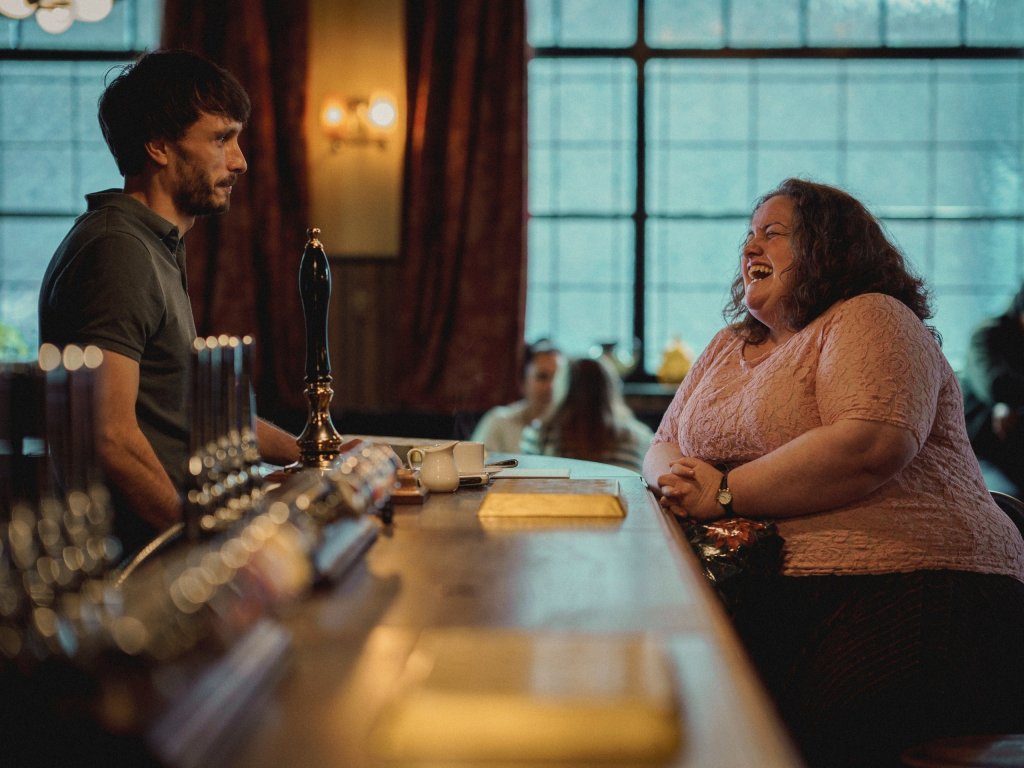
Gadd worries that, as a result, the audience will think he’s “not a nice person” – but nice person or not, Gadd was still a victim. Indeed, the myth that victims must be ‘perfect’ prevents convictions from taking place and protects perpetrators.
Eliana Dockterman of Time Magazine describes the “perfect victim” as an “innocent” who cuts off contact with their abuser, has never lied about anything, doesn’t drink or do drugs, is the perfect employee, the perfect parent, and most importantly “does not exist”, using Amber Heard as an example.
These unachievable standards demanded by the criminal justice system and public alike have real-world implications for those attempting to report their abusers. This was exemplified by the online abuse Heard received during her defamation trial against Johnny Depp in 2022 that has since been described by a Bot Sentinel report as an “organised campaign” and “one of the worst cases of cyberbullying and cyberstalking by a group of Twitter accounts that [they’d] ever seen”.
While Baby Reindeer emphasises that real life isn’t so black and white in terms of villains and victims, fans of the show insist on exposing the true Martha. The result is that the accused, Fiona Harvey, has actually appeared on Piers Morgan’s YouTube channel to speak her truth.
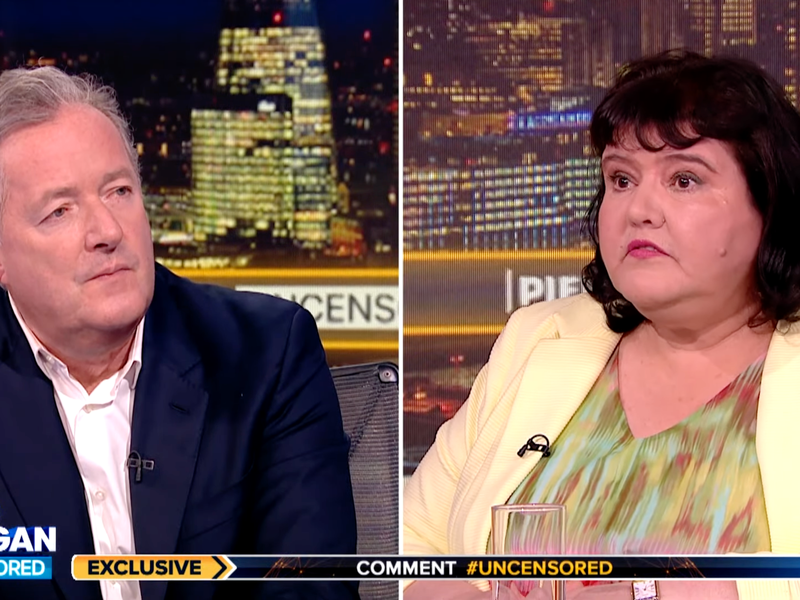
However, throughout the interview, Harvey failed to convince audiences of her innocence. What ensued was an internet frenzy of ridicule as fans and trolls piled on the harassment. Indeed, it was clearly unethical for Morgan to feature such a vulnerable figure, already struggling with the attention brought about by the show’s success.
In response to the scrutiny around Harvey – as well as the news that actor, Sean Foley, has contacted the police after facing false allegations of being the real person behind the show’s Darrien O’Conner – Gadd released a statement. Here he asked fans not to speculate on the true identity of the show’s characters, explaining, “that’s not the point of our show”.
Finding Strength in Vulnerability: The Importance of Support and Understanding
Prior to ‘Martha’, Gadd was raped by an older TV writer – ‘Darrien’ – who promised to help him get his start in comedy.
In a recent Guardian interview, Gadd explained that after the abuse, he experienced a feeling of “disempowerment” which originated from “old ideas of what it means to be a man”. Later, he realised there was actually strength in speaking out, which helped him to heal.
Gadd sought help from charity We Are Survivors and now works with them to raise awareness around male survivors of sexual abuse.
The National Stalking Helpline revealed that while one out of every ten men experience stalking, eighty-five percent of victims do not report to the police – often due to worries of not being believed or being seen as “unmanly”.
Post Me-Too, the world is slowly becoming aware of the horrors female victims have experienced at the hands of sexual predators – but society is still catching up to the idea that men can be victims too.
This is clear in the show when Donny attempts to report Martha, however is met with a police officer who dismisses his concerns, questioning how much danger he can be in considering his stalker is a woman. This provides a brief look into how the policing system fails male survivors even after speaking out to try and get help.
Although it is natural for viewers to speculate as to the true identities of those who hurt Gadd/Donny as we take on his struggles throughout the show, it’s important that we don’t lose the meaning in the mist.
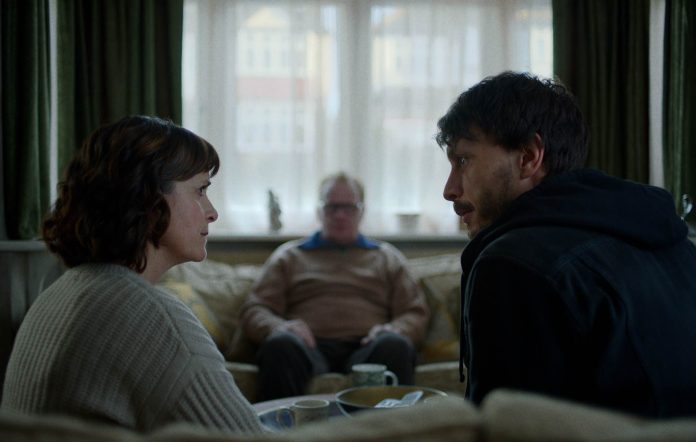
In the show’s final episode, Donny opens up to his parents about his abuse, expressing feelings of embarrassment and emasculation “having let something like that happen to [him]”.
While his mum immediately reassures Donny, exclaiming that he’s their son no matter what, his dad sits quietly beside her, stone faced. For a painstaking moment, the audience is left to question which way this will go – will Donny’s dad double down on his shame, or stand by him as he comes to terms with his trauma?
Teary eyed, his dad asks, “would you see me as less of a man?”, before confiding that he was abused as a child, having grown up in the Catholic church. The scene concludes with the family closer than ever, and as Donny goes to shake his dad’s hand, the two fall into an embrace instead.
The moment is a cathartic one as we see a glimpse of relief for our protagonist, watching Donny as he melts into his father’s arms. The scene is also powerful in its ability to concisely encapsulate the torment that the patriarchy wreaks on men and boys alike. As Donny explains, his abuse left him feeling “less of a man”, shrouding him in shame as he swore himself to secrecy for years after.
It’s true that shame and feelings of emasculation become powerful silencers for male victims. In channel 4’s two-part documentary, Spacey Unmasked, released earlier this month, ten of Kevin Spacey’s victims came forward to tell their story. One – named as Scott – explained that he blamed himself after the abuse: “You feel like you did something wrong, you brought it on yourself, and you feel shame”. During the interview, the ex-marine began to cry but quickly dismissed his tears, asserting, “I don’t want this to be a victim thing, strength is important to me, [..] men aren’t supposed to let this get under their skin”.
With this in mind, it becomes clear that instead of embarking on a witch hunt and targeting vulnerable people like ‘Martha’, we must work to dismantle the system that forces victims into hiding. Thinking of the men and boys in our life – do we provide a space for them to live authentically, or do we perpetuate patriarchal standards that insist men don’t and shouldn’t cry?
Gadd puts it best in Netflix’s ‘The Making of Baby Reindeer’, explaining what he hopes to achieve from the show: “I hope when people see it who have been through similar things, that they feel less shame about it. […] I hope it provides peace. I think it would have provided peace for me.”
Within the first two weeks following the release of Baby Reindeer, the number of first time callers requesting support from We Are Survivors saw an 80 percent increase, where 53 percent cited the show as their reason for reaching out.
Moving forward, we must keep Gadd’s words in mind and work to provide victims with peace and community, rather than wasting our efforts spreading further hate that only works to perpetuate the cycle of abuse devastatingly portrayed in the show.
 The Curve Magazine