By Susanna Borio
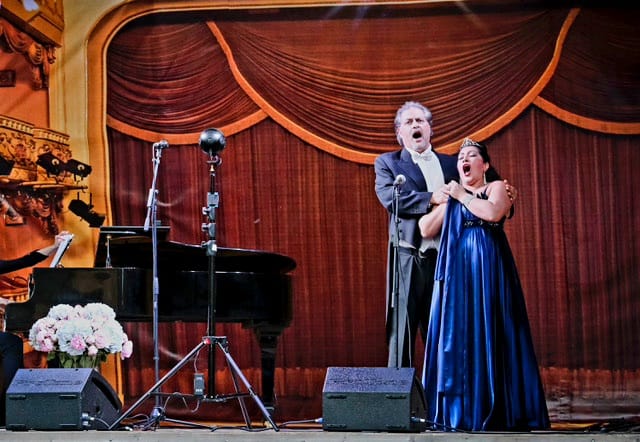
Born in Rome, Italy, tenor Fabio Andreotti studied singing with Antonio Boyer and the late Gianni Raimondi.
Andreotti made his debut in 1996 singing Hayden’s “Salve Regina” and that same year he won the Francesco Albanese Competition and sang Alfredo in “La Traviata” at Teatro Manzoni di Roma.
His talent was quickly recognised, and he began travelling the world across some of the grandest music halls in Tokyo, South Korea, Russia, Estonia, Turkey, USA, Egypt and many more.
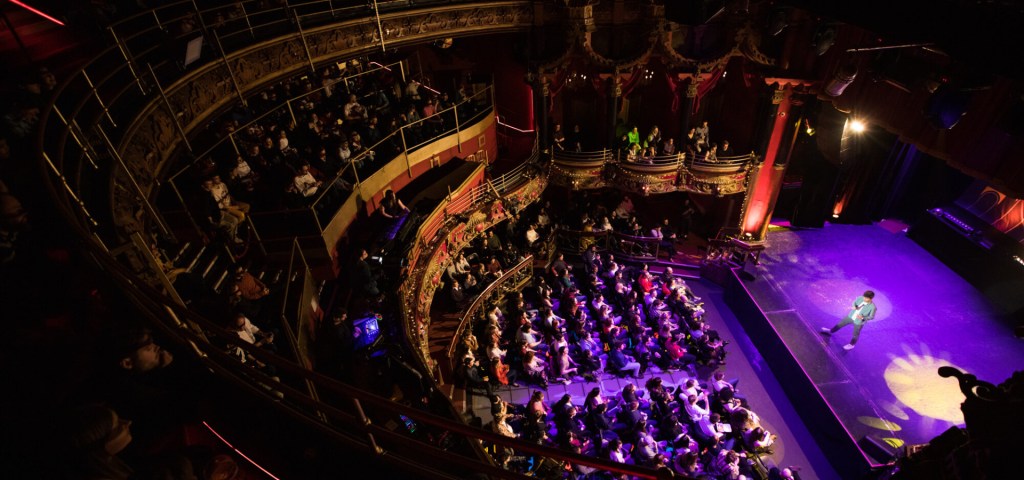
This next November 8th 2023 Andreotti will be joined by incredible mezzo-soprano Alessandra Della Croce in historic Clapham Grand concert venue to present “Amore e Passione: Italian Opera and Neapolitan Songs”.
The concert program is packed with world-famous pieces from the likes of Giacomo Puccini, Giuseppe Verdi, Georges Bizet, and other legendary composers.
We spoke with Andreotti about his journey in classical music ahead of the unmissable concert.
Who or what inspired you to pursue a career in music?
When I was a child at the opera, I once heard the real voice of Jose Carreras, and it particularly impressed me. This led me to become interested in the human voice in general.
So I started singing in churches, considering that we are talking about the time when some liturgies were still celebrated in Latin with religious pieces.
Later, alongside my classical high school studies, I started taking singing lessons until I attended the opera academy in Sulmona, Italy, for a few years, where there was a chance to meet great singers such as Magda Olivero, Renato Bruson, and especially my Maestro, tenor Gianni Raimondi.
They passed on to me a singing technique that came from the 1800s and had formed the great Italian singers of the past and that I still continue to research and use to this day.
What have been the most important influences on your musical life and career?
There have been encounters with people who have fascinated me and shown me a different way to do things. I would put tenor Gianni Raimondi, who had performed about 300 performances at La Scala in Milan, in the first place. He introduced me to conductor and pianist Leone Magiera, at that time pianist to tenor Luciano Pavarotti.
Meeting Pavarotti afterwards, in front of whom I sang Donizetti, was a confirmation of a certain way of singing, which had in the phrasing and colours of the voice its strong point. I particularly remember the advice he gave me, especially on the romance ‘Una furtiva Lagrima’ from L’elisir d’amore.
What have been the greatest challenges of your career so far?
One of the first challenges I had to face that comes to mind in answering this question was having to perform a Verdi Requiem at the ‘La Fenice’ theatre in Venice considering that it was reported that I had to perform the role only three days in advance!
Another challenge, which I can now say was successfully overcome, was having to do the role of Radamés in an Aida at the Cairo Opera House without any rehearsal. This was because the flight had been delayed and I found myself from the airport directly on stage, with the orchestra and 100 chorus members, on opening night.
Which performances are you most proud of?
This is a very interesting question. I can say that I feel particularly proud whenever the role requires new vocal solutions, or something that allows me to study the reaction of my body and thus my singing under difficult conditions.
Lately I can think of a tour in China where it involved performing 37 concerts in 50 days. This meant having to calibrate rest and energy for performance from time to time. The program also was particularly demanding and acute.
However, by recording each performance I was able to study where and how to best rest the body while singing.
I must also mention the concerts held in Moscow since 2011 and which continued for several years, because of the really good relationship I had with the Russian public, who greatly appreciated the Italian repertoires. An audience often very prepared.
Which particular works/composers do you think you perform best?
I’ve always thought that my voice is well suited to romantic roles in the Italian repertoire. This implies that the composers of reference are undoubtedly Giuseppe Verdi and Giacomo Puccini. As is natural the voice, with the passage of time, takes on more dramatic characteristics. These have allowed me to face works such as Othello, Aida, Tosca.
Furthermore, I believe that my phrasing adapts quite well to the genre of popular classical songs, such as the Neapolitan repertoire, sung and recorded by great tenors such as Caruso, Gigli and Pavarotti.
“I believe that there is a misunderstanding about opera. People think they are supposed to attend a high- culture affair, which requires a great deal of preparation. Instead, I think the issue needs to be greatly simplified: operas are like fairy tales.”
What do you do off-stage that provides inspiration on stage?
Off stage I try to broaden my horizons by reading texts on the works themselves, in particular I am interested in the historical period of reference. I believe that this allows me to best represent a certain role, and that it allows me to convey to the public the facets often hidden within the texts.
The magic of the unfounded voice consists, unlike reading, of being able to convey the various states of the human soul. Let’s just think, for example, in how many tones can be pronounced the word ‘love’.
What do you feel needs to be done to grow classical music’s audience?
I believe that there is a misunderstanding about opera. People think they are supposed to attend a high- culture affair, which requires a great deal of preparation. Instead, I think the issue needs to be greatly simplified: operas are like fairy tales, some are really and historically fairy tales.
Think for example of Tourandot, which was an ancient Chinese tale.
What I mean is that opera touches archaic human chords that are universal. It uses music, speech and the machinery of theatre to do this. It is archaic and spiritual. It is man’s need to see himself represented in order to truly understand himself.
After all, the earliest prehistoric graffiti depicted men dressed in leather doing a kind of representation.
So going back to the question, in my opinion we should cultivate the need for humans to see live performances. Clearly, this should be done from an early age, but it is never too late.
What is your most memorable concert experience?
I happened to do, in times of peace, the opera ‘Gianni Schicchi’ in Damascus, Syria. It was a challenge because, although the theatre was beautiful, the opera clearly was in Italian (with some translation) and for the audience it was perhaps the first time they had seen an opera, since of course the independence of the country.
This was because the theatre was a French building attended only by Europeans. It was amazing to see the enthusiasm of the local audience in front of Puccini’s masterpiece.
What advice would you give to a young aspiring singer?
I would recommend cultivating culture in general to reach expressive maturity. After all, the ultimate goal for the singer is to convey states of mind to people and not to be mere performers.
What’s next? Where would you like to be in 10 years?
I live a little day by day, going where my voice takes me. I don’t know if it’s right or wrong, but so far it has taken me to over 30 countries, getting to know very different cultures and sometimes having brought this art to a country for the first time.
I only remember, as a very recent experience, that I went to Uzbekistan, perhaps among the first Italians. A country where the greatest singers in the world, such as Placido Domingo, and great theatres are now establishing themselves very quickly.
So back to the question, I don’t have an answer. However lately through Master Classes and lessons, I’m dedicating myself more and more to teaching singing.
You can find tickets to the event here.
 The Curve Magazine